If happiness were a sport, most of us would be running an ultra-marathon with no finish line and no snacks.
Happiness is everywhere — on coffee mugs, billboards, LinkedIn posts, and probably the last inspirational quote your aunt texted you. But here’s the catch: chasing it like a finish line often leaves us feeling… less than happy.
Happy Enough is about stepping off the hamster wheel of “more” and choosing something far more sustainable: contentment, sufficiency, and meaning.
This isn’t settling. It’s choosing to define success on your terms — and giving your brain a fighting chance to keep up.The pursuit of happiness can be a trap. When we tie our worth to constant highs, we set ourselves up for burnout and discontent. This month, we’re exploring a different path: the neuroscience of “Happy Enough.”
The chase that never ends (and why your brain is on it)
We’ve all heard it: “I’ll be happy when…” Fill in the blank — promotion, relationship, vacation, world domination (obviously).
The problem? The human brain has a built-in trickster called hedonic adaptation — the reason that new car smell, new job buzz, or new relationship butterflies eventually fade like your motivation for January gym memberships.
Here’s what happens:
- You get a hit of dopamine (the brain’s feel-good, “ooh shiny” chemical).
- Your brain loves it and sets a new baseline.
- So you chase the next thing to get the next hit.
This loop isn’t a moral failing. It’s a survival mechanism. Your brain was designed to keep scanning for what’s next — helpful when avoiding saber-toothed tigers, less so when you’re just trying to enjoy your coffee.
THE PERFECTION MYTH (AND WHY IT’S A LIE)
Let’s talk about the silent saboteur: perfectionism.
Society feeds us a steady diet of highlight reels and Pinterest-level lives — no bad lighting, no burnout, no actual humans. The pursuit of perfect happiness creates a neural feedback loop that keeps the amygdala (danger detector) lit up like a Vegas strip. When your brain perceives “not enough,” it stays in survival mode.
And when that happens?
❌ Creativity tanks.
❌ Problem-solving short-circuits.
❌ Emotional resilience goes on vacation without you.
The antidote isn’t “positive vibes only.” It’s contentment — not the glossy, everything’s-fine version, but the gritty, real-life kind. The kind that says, “I may not have everything I want, but I have enough to breathe right now.”
REWIRING YOUR BRAIN FOR “ENOUGH”
Here’s where neuroscience gets juicy. When we name the good — small wins, quiet moments, tiny victories — we shift neural activity from the amygdala to the prefrontal cortex (your brain’s CEO). That move increases clarity, decision-making, and emotional regulation.
This is why gratitude practices actually work — not because the universe suddenly ships us a yacht, but because our brain chemistry tilts back toward balance.
Try this micro-habit:
- Identify one thing that’s enough right now.
- Pause. Name it out loud. (Yes, even if it’s “this cup of coffee isn’t trying to ruin my life today.”)
- Notice how your nervous system responds.
That’s not woo-woo. That’s PFC reactivation and a subtle dopamine recalibration.
PERSONAL STORY: THE DAY AFTER THE HARDEST YEAR
Static sentence: I never recommend anything I haven’t tested in the personal lab experiment I call my life. (Results may vary — usually with chaos.)
There was no confetti. No roaring applause. No stage lights.
There was just me, a hospital-issued bed, and ten very long minutes of gravity doing its thing.
I’d spent an entire year flat on my back. A year of failed surgeries, insurance denials, and the kind of pain that doesn’t just test your body — it tries to rewire your hope. Every day blurred into the next, like living in a paused movie you didn’t remember auditioning for.
When my doctor finally cleared me to try sitting up, you’d have thought I was preparing for a summit climb. They propped me up slowly, carefully — and the room spun like a carnival ride no one asked to get on. Ten minutes upright. That was my Everest.
Here’s the thing: those ten minutes weren’t glamorous. I wasn’t delivering a keynote, signing a book, or dropping some inspiring TED Talk line like “gravity taught me resilience.” I was just… sitting. Sweating. Breathing. Trying not to pass out.
And yet? It was one of the most powerful moments of my life.
People often assume big turning points come with fireworks. In reality? Mine came with an ugly hospital gown and a blood pressure cuff. And I wouldn’t trade it for the world.
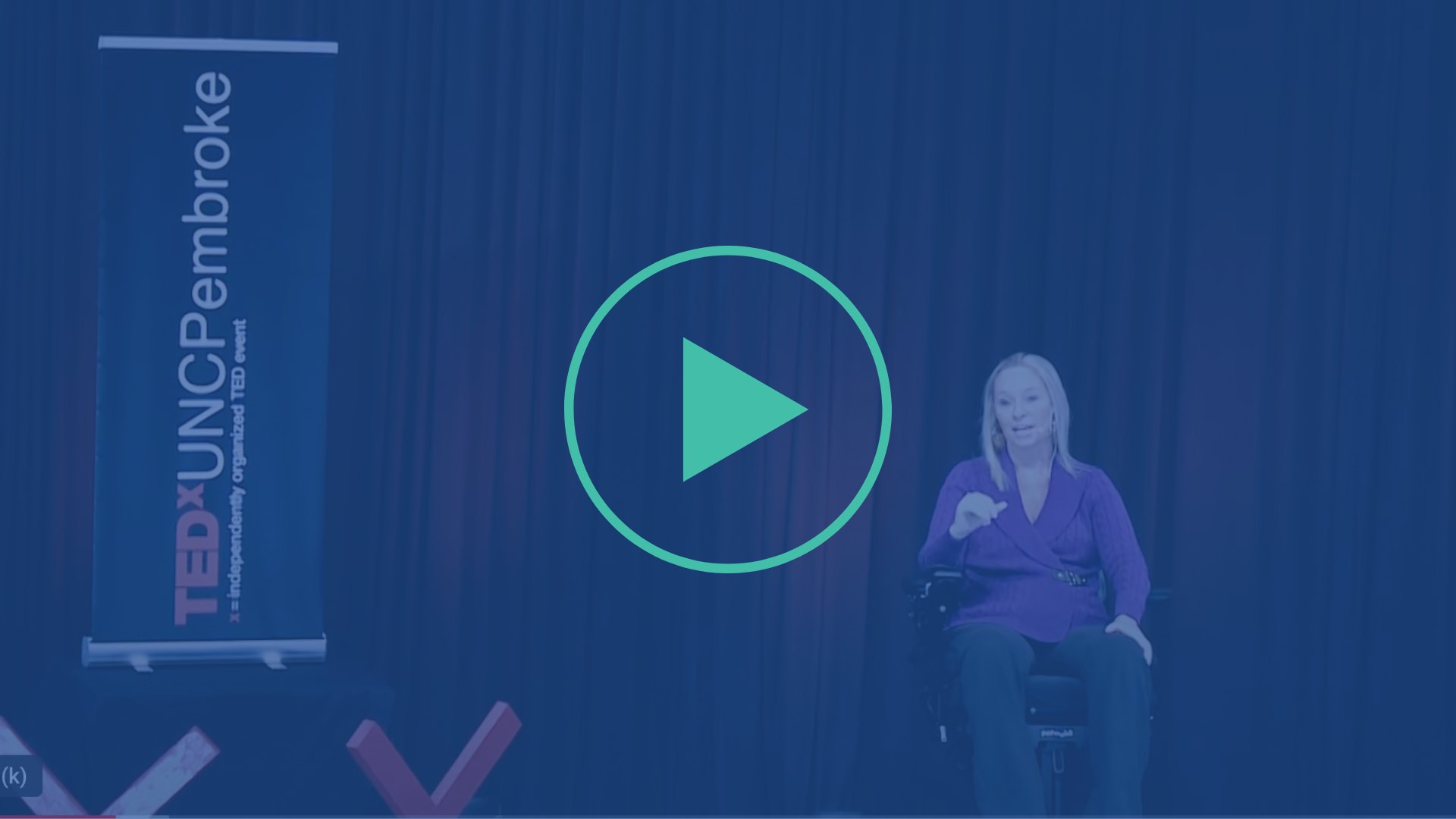
Today, I get to stand on stages and deliver keynotes to thousands. But here’s the truth: that ten-minute sit-up felt every bit as meaningful as those moments. Both are victories. Both are “enough.”
One might get a standing ovation. The other just got me standing (well, sitting). But both changed my life.
That moment taught me something I carry into every part of my work — especially with leaders and teams
Personal Application:
Perfectionism and the endless chase can quietly steal our present.
Try this:
- List 3 ordinary moments in your day that bring you quiet joy.
- Sit with them — don’t race past.
- Notice how your brain responds.
That micro-reset trains your PFC to override the constant pull of “not enough.” It’s not about lowering the bar — it’s about anchoring in the present.
Professional Application:
In leadership and organizational culture, chasing an unattainable vision of “perfect happiness” can quietly breed disengagement. Teams fixate on external metrics — revenue, performance reviews, applause — and forget to acknowledge the power of contentment as fuel.
When teams practice sufficiency — recognizing progress, celebrating micro-milestones, and building psychological safety — performance actually improves. This isn’t fluff; it’s brain science.
- Contentment lowers threat activation in the amygdala,
- Reactivates the prefrontal cortex,
- And boosts collaborative problem-solving.
Leaders who model “Happy Enough” set a cultural baseline where people can thrive, not just strive.
Wrap Up:
You don’t need a bigger trophy, a better title, or a house with more square footage than the GDP of a small nation to be happy.
You need to recognize what’s enough — right now, in this messy, imperfect, gloriously human moment. Okay you echoed this is so awesome you just saved me like two hours
Because happiness isn’t hiding on the other side of “more.” It’s sitting quietly right here, waiting for you to notice.
“Happy Enough” isn’t small. It’s revolutionary.

Sitting up for 10 minutes after being in bed for an entire year without passing out. It seemed so small, but it was just as meaningful to me as standing on stage speaking to hundreds. That moment wasn’t perfect. It was enough.
TWO THINGS FOR YOU TO THINK ABOUT
- Happiness isn’t a permanent state — it’s a fluctuating emotion. Contentment, on the other hand, is steady ground.
- The pursuit of “perfect” happiness can actually work against our brain’s ability to feel satisfied. It’s not a lack of ambition — it’s a wiring issue.
TWO THINGS FOR YOU TO ASK YOURSELF
- What version of “happy” am I chasing that might actually be holding me hostage?
- If I stopped striving for more and focused on enough, what would feel different in my daily life?
ONE THING FOR YOU TO TRY THIS WEEK
- The next time you catch yourself in the “I’ll be happy when…” loop — pause.
Ask: “What’s enough, right now?”
Remember: “Happy Enough” isn’t mediocrity. It’s clarity. It’s freedom. It’s deciding that joy isn’t something to chase — it’s something to recognize.