Your brain didn’t design beliefs for happiness. It designed them for speed, safety, and survival.
Heuristics — mental shortcuts — help us decide quickly. But over time, those shortcuts harden into rules like:
- “This is just how I am.”
- “This always happens to me.”
- “I don’t get to choose.”
This month, I’m exploring how to identify the beliefs running in the background — and how taking responsibility doesn’t mean blaming yourself, but becoming the architect instead of the tenant.
Most of us assume our beliefs are facts. They feel solid. Proven. Earned. But many of them were never tested — just installed.
Your brain is an efficiency machine. It builds shortcuts so you don’t have to think from scratch every time life throws something at you. These shortcuts are helpful… until they quietly become rules. And rules, once internalized, start shaping behavior without ever asking permission.
That’s how people end up living inside beliefs they never consciously chose.
THE BRAIN BUILDS FOR SPEED, NOT ACCURACY
Your brain didn’t evolve to give you a perfectly accurate view of reality. It evolved to keep you safe, moving, and functional. So it relies on patterns: “If this happened before, expect it again.” “If this hurt once, avoid it forever.” “If this worked under pressure, repeat it.”
Over time, those patterns solidify into beliefs — not because they’re true, but because they’re familiar. The brain loves familiar. Familiar feels safe. And safe feels like truth.
WHEN BELIEFS BECOME WALLS INSTEAD OF WINDOWS
The problem isn’t that beliefs exist. The problem is when they stop being questioned.
“This is just how I am.” “This always happens to me.” “I’m not built for that.” “They won’t understand.” “It’s too late now.”
None of these are facts. They’re conclusions your brain reached at one point — often under stress — and never revisited. Beliefs that once protected you can eventually limit you. Not because they’re wrong… but because they’re outdated.
You don’t outgrow beliefs by fighting them. You outgrow them by noticing them.
YOU’RE NOT BROKEN — YOU’RE LIVING IN AN OLD BLUEPRINT
Here’s the reframe that matters: You are not irresponsible for having limiting beliefs. You are not lazy. You are not failing at mindset. You’re just living inside a structure your brain built quickly — and never renovated.
Architecture matters. The layout determines how you move. The walls determine what you see. And the exits determine what feels possible.
Once you realize beliefs are designs — not destinies — something shifts. Not pressure. Not urgency. Clarity.
PERSONAL STORY:
I never recommend anything I haven’t tested extensively in my own life — I’m the chief scientist in my personal laboratory of perspective. And I know you’re doing the best you can with your own experiments too.
When I was first injured and paralyzed from the chest down, remote work wasn’t a thing. Zoom wasn’t a thing. And from a very “normal job” perspective, I didn’t think I had many options.
At the time, I was learning how to day trade, so my brain quietly decided: Well, this must be it. This is the lane. This is the building. No exits.
For years, it didn’t even occur to me that I could have a “real” job — at least by society’s definition — because I couldn’t physically go into an office all day. I told myself, I just can’t do it. And eventually, that belief stopped sounding like a thought and started sounding like a fact.
It wasn’t until nearly ten years after my accident — after a year in bed with a pressure sore down to the bone, multiple failed surgeries, and more health insurance denials than I can count — that something shifted. I got angry. And when I get angry, I get productive. (It’s a feature, not a bug.)
As I connected with the disability community, I realized there were people like me everywhere — navigating the same barriers and building lives far bigger than the box I’d been living in. That’s when I started questioning my own assumptions.
Once that belief loosened, everything else followed. Consulting. Speaking. Advocacy. Work that didn’t exist in my world before — not because it wasn’t possible, but because I couldn’t see it from inside the old structure.
The moment I noticed that belief, it stopped running the place.
Professional Application:
Organizations don’t stall because of lack of talent. They stall because of inherited beliefs — the kind that get passed down like office furniture no one remembers buying.
- “This is how we’ve always done it.”
- “That role isn’t ready yet.”
- “They won’t buy into this.”
- “We tried that once.” (Usually in 2009. Under different leadership. During a full moon.)
These aren’t strategies. They’re assumptions — often formed during a moment of pressure, failure, or urgency — that quietly became policy without ever going through a renovation phase.
Here’s the problem: when people feel trapped inside unexamined beliefs, their brains shift into compliance mode. They do what’s required, not what’s possible. Engagement drops. Creativity goes quiet. Everyone gets very good at looking busy.
When teams are invited to question beliefs instead of defend them, something changes. Ownership increases. Accountability shows up voluntarily. Not because anyone yelled “be more motivated,” but because autonomy restores agency — and agency tells the brain, “Oh good, I’m allowed to think again.”
A simple leadership shift to try:
- Instead of defending the belief, ask where it came from.
- Instead of forcing buy-in, invite redesign.
You don’t need people to work harder. You need them to stop working inside rules they never helped write — and probably wouldn’t approve if asked today.
Personal Application:
Before you change anything, pause. This isn’t about fixing yourself. You are not a DIY project that went wrong. This is about noticing the structure you’re standing in — preferably before you keep bumping into the same wall.
Here’s a gentler way to approach it:
- First, name the belief — without judgment. Not “this belief is terrible and ruining my life,” but “oh… this belief exists.”
Then ask:
- When did my brain build this?
- What was it trying to protect me from at the time?
- And is it still doing that job — or is it just squatting there, eating resources, and refusing to leave?
You don’t have to knock the whole building down. You don’t need a five-year renovation plan. You don’t even have to replace the belief today.
Sometimes the most powerful move is simply realizing:
“I didn’t choose this… but I don’t have to keep living in it.”
That awareness alone creates breathing room. And breathing room is where new options appear — along with a little humor, a little relief, and the sudden realization that maybe you’re not stuck… you’re just overdue for an update.
Wrap Up:
You don’t have to redesign your entire life. You don’t need a new personality, a vision board, or a color-coded spreadsheet labeled “New Me.”
You also don’t need to delete every belief you’ve ever had. Some of them are doing important work. Others… are just taking up space and insisting they’ve “always lived here.”
The goal isn’t to tear the building down. It’s to notice what you’re standing inside.
Because the moment a belief becomes visible, it stops running the place. It becomes optional. Negotiable. Renovatable.
And no — that’s not motivation. It’s not willpower. It’s not “positive thinking.”
It’s realizing you’ve been the architect all along…
you just forgot you had the blueprints.
And honestly? That’s a much better problem to have.
TWO THINGS FOR YOU TO THINK ABOUT
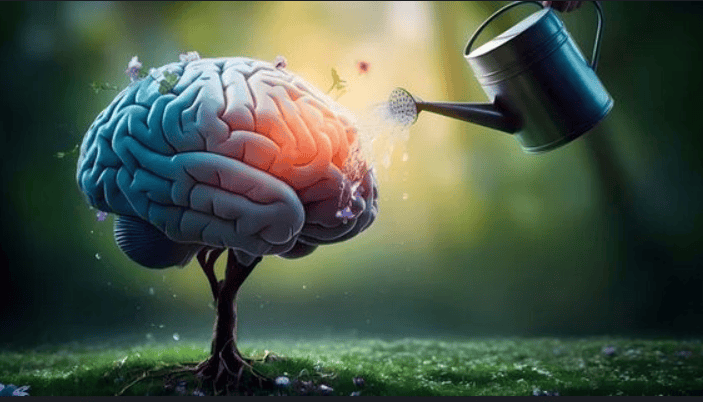
- Most beliefs aren’t truths — they’re mental shortcuts your brain installed to save time and energy.
- If a belief was built during stress, fear, or survival mode, it might still be running your life long after the threat is gone.
TWO THINGS FOR YOU TO ASK YOURSELF
- Where did this belief come from — experience, repetition, or protection?
- If I were designing this belief today, would I still build it the same way?
ONE THING FOR YOU TO TRY THIS WEEK
When you catch yourself saying “I have to,” pause and replace it with “I choose to.”
When you catch a strong emotional reaction, pause and ask: “Is this a fact… or a brain shortcut doing its job?”
You don’t have to change the belief. Just notice it. Awareness is the first renovation.